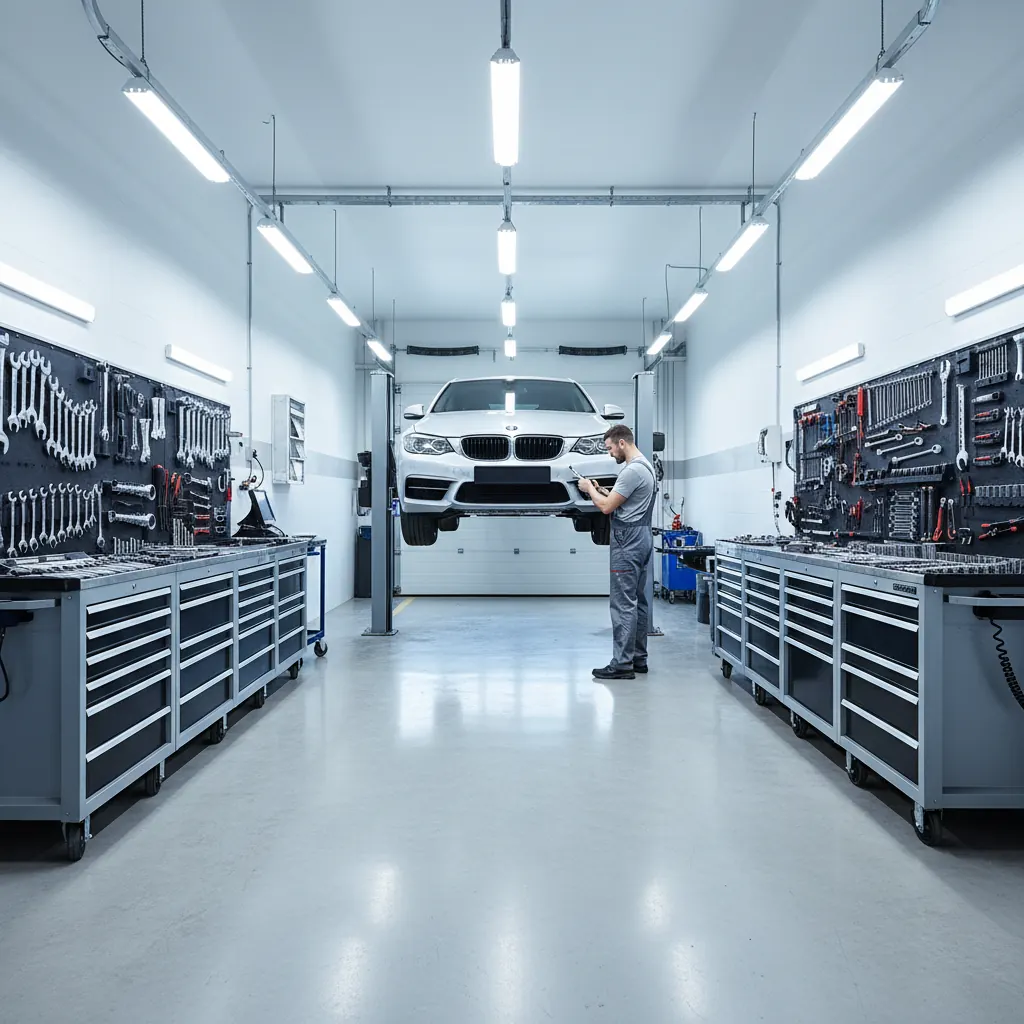
Working capital for auto repair shops is not a luxury. It is the difference between a shop that grows and a shop that stalls.
Independent shops and multi-bay operations face a specific kind of financial pressure that most business owners in other industries do not fully understand. Revenue is real. Demand is often strong. But cash flow? That is another story.
This guide breaks down exactly how shop owners deploy working capital: what they fund, why it works, and what to think about before you move.
The Auto Repair Cash Flow Problem
You do the work. You order the parts. The technicians clock in. The insurance adjuster takes three weeks.
That gap: between when money goes out and when it comes in: is where shops get squeezed. Unlike a restaurant where customers pay the same day, an auto repair shop often waits on insurance companies, fleet accounts with net-30 payment terms, or customers who split payments.
Add in the fact that parts costs have climbed sharply in recent years, labor costs are up, and the equipment needed to stay competitive does not come cheap. You have a business that generates solid revenue but runs lean on available cash at any given moment.
That is where working capital comes in.
1. Covering Parts and Inventory Before the Money Arrives
The most common use case, full stop.
A shop takes in a major collision repair job or a fleet of vehicles from a commercial account. You need the parts now. The distributor wants payment now. The customer or their insurer will not settle for weeks.
Working capital bridges that gap. You pull the funds, order the parts, complete the job, and when payment comes in, the capital is repaid through your revenue stream.
This keeps your shop operating at full capacity instead of turning down work because you cannot front the materials.
Many shop owners do not realize how much revenue they leave on the table by passing on larger jobs due to parts cost exposure. The math often favors using short-term capital to take on work you would otherwise decline.
2. Equipment Upgrades Without the Bank Timeline
Modern auto repair is increasingly diagnostic. Vehicles today run on software as much as steel. A shop without current scan tools or a quality alignment system is watching customers drive past to competitors who can handle their car.
The problem: a quality four-wheel alignment machine runs $20,000 to $60,000. A full diagnostic workstation can be another $15,000 to $30,000. A new two-post lift adds $8,000 to $15,000 depending on capacity.
Banks want two to three years of tax returns, a business plan, collateral, and six to eight weeks to maybe say yes.
Working capital moves faster. Many funders can deploy capital in days, not months. For a shop looking to add a bay, upgrade to newer lift equipment, or bring diagnostic capabilities in-house instead of subcontracting, that speed matters.
If new equipment generates revenue from day one, the math often works. The alignment machine pays for itself in jobs per week. Capital repayment runs alongside that new revenue rather than waiting on a bank timeline that may never come.
Key note on repayment: Structures vary significantly depending on your funder and the specific terms of your deal. Some funders use daily ACH, others weekly, others split processing arrangements tied to card volume. Review your specific agreement carefully before signing.
3. Smoothing Out Seasonal Slow Periods
Most shop owners know it: Q1 is often thin.
Customers who got their vehicles ready for winter in the fall are not coming back for routine service yet. Fleet clients may have budget freezes early in the year. A stretch of slow weeks cuts into service volume.
Meanwhile, rent does not pause. Payroll does not pause. Insurance does not pause.
Working capital pulled during a strong prior quarter can carry a shop through a predictable soft window without cutting staff or falling behind on vendor accounts. This is strategic cash management, not emergency survival.
The shops that navigate seasonality best are not always the ones with the most revenue. They are the ones that manage cash position with the same precision they apply to their bays.
4. Seizing Bulk Purchase Opportunities
Parts distributors offer pricing breaks for volume buys. Oil, filters, tires, brake pads, common wear items: if your shop runs volume, a purchase commitment can reduce per-unit cost meaningfully.
The problem is that most shops cannot front $10,000 to $30,000 for a bulk purchase out of operating cash without feeling it in their daily position.
Working capital solves this. Buy the inventory at the volume discount, sell it through normal operations, and repay from the revenue that inventory generates.
Done right, the savings from the discount can partially or fully offset the cost of the capital. Run your numbers carefully. The factor rate on your specific deal, the discount available, and your expected sell-through timeline all matter. For high-volume shops with strong distributor relationships, this is a real play.
Typical bulk parts inventory purchase that volume shops can negotiate at a meaningful discount with distributor commitments
